A clean wall beats a vague maybe
We once spent the better part of a week showing an idea wouldn't work. On paper, that's a week lost. It was one of the most useful weeks of the month — because we came out of it knowing exactly where the wall was, and what a solution would have to do to get past it.
That's the whole habit: treat a located failure as an asset worth banking.
A vague negative — "we tried it, it didn't really work" — is worth almost nothing a month later. You can't build on it, you can't rule anything out with it, and you'll probably re-run it by accident. A located negative is the opposite: a specific mechanism, a specific reason, and the specific condition under which it would have worked instead.
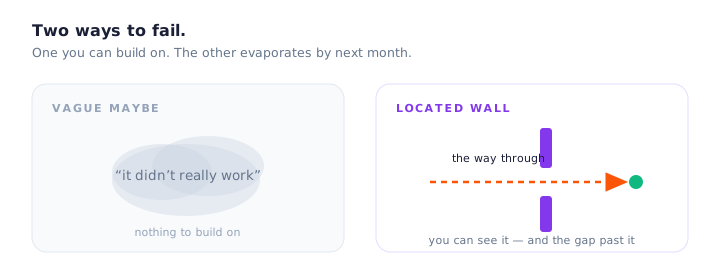
We keep a running ledger of these. Each entry is small — a claim, what it was tested against, the evidence, the boundary it draws — and over time the ledger becomes a map of the whole problem. Not a list of disappointments: a set of walls we never have to walk into twice, each one pointing at the gap a real solution has to go through.
The shift is simple, but it changes everything. You stop trying to be right and start trying to be precise about being wrong. Precision compounds. Being right once doesn't.