Where similarity runs out
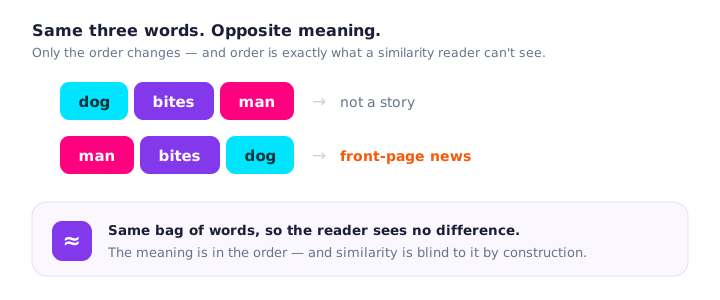
"Dog bites man" is not a story. "Man bites dog" is. Same three words; only the order changed, and the meaning flipped all the way over.
A system that reads by similarity can't see that flip. It judges things by how close they are to what it already knows, and by that measure the two sentences are nearly identical: same words, same neighbours. That isn't a bug you can patch — it's what similarity is.
To be fair, similarity is a brilliant reader of one kind of structure: smooth structure, where nearby things genuinely do predict each other. Point it at that and it generalises beautifully. But a lot of what matters isn't smooth. It lives in the arrangement — the order of things, how they nest, which parts bind to which. That's composition, and "nearby" tells you almost nothing about it.
Why this counts as a wall, not a bad run
We didn’t get here from one disappointing experiment. We reached the same ceiling six structurally different ways: different substrates, different readouts, different framings. Every one learned the smooth tasks. Every one failed when the answer depended on arrangement.
That makes the result useful, and slightly embarrassing.
We built six increasingly respectable ways to compare the guest list. The task was asking for the seating plan.
Similarity had not malfunctioned. It was doing exactly what we built it to do: notice what was present. We had quietly hoped that enough machinery around it might also recover who did what to whom.
It did not.
So whatever comes next has one non-negotiable requirement: order, binding, and nesting must be represented directly, not smuggled in through resemblance. Six architectures later, we have learned that words come in an order.
The words, in fairness, had been very clear about this.